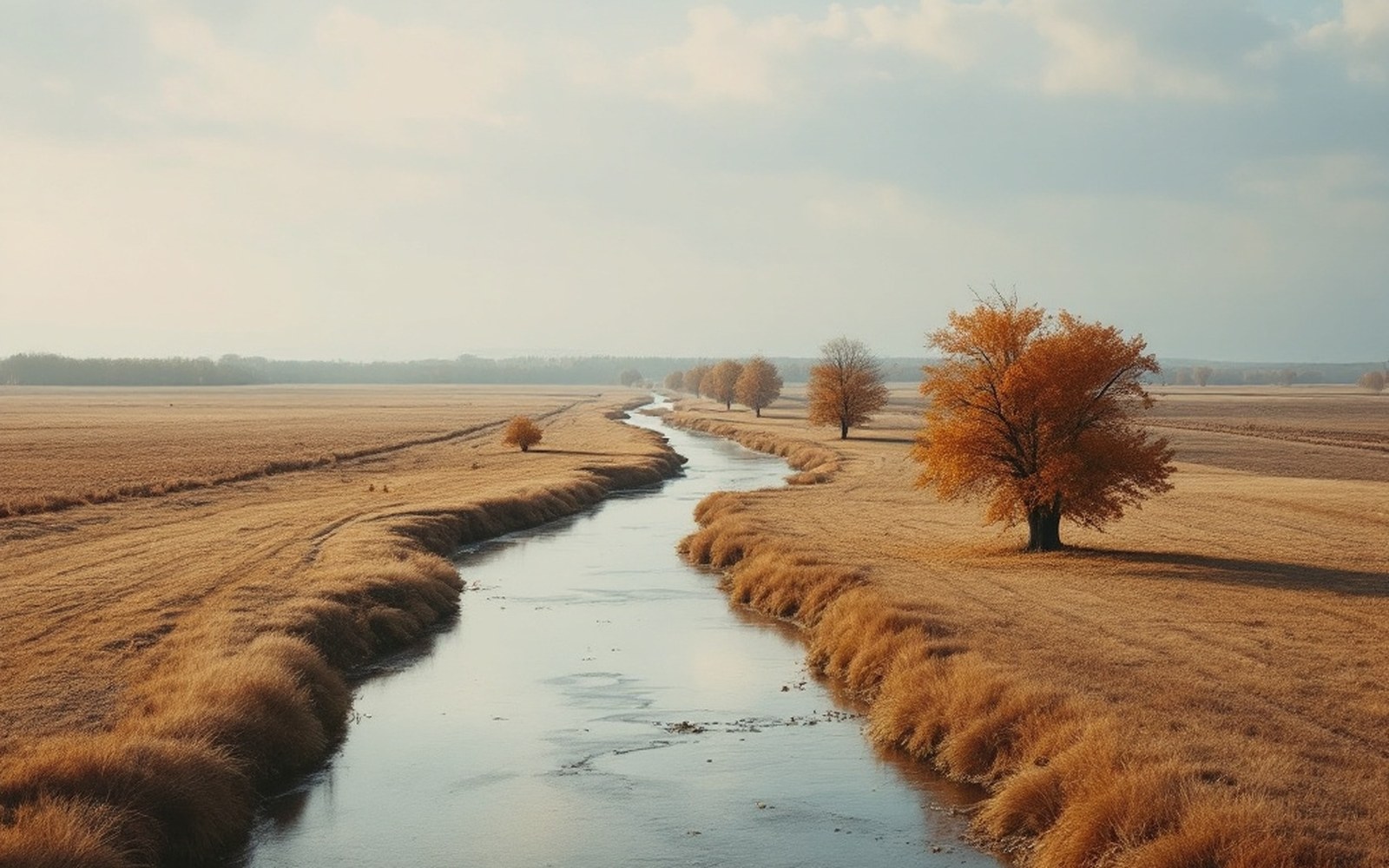
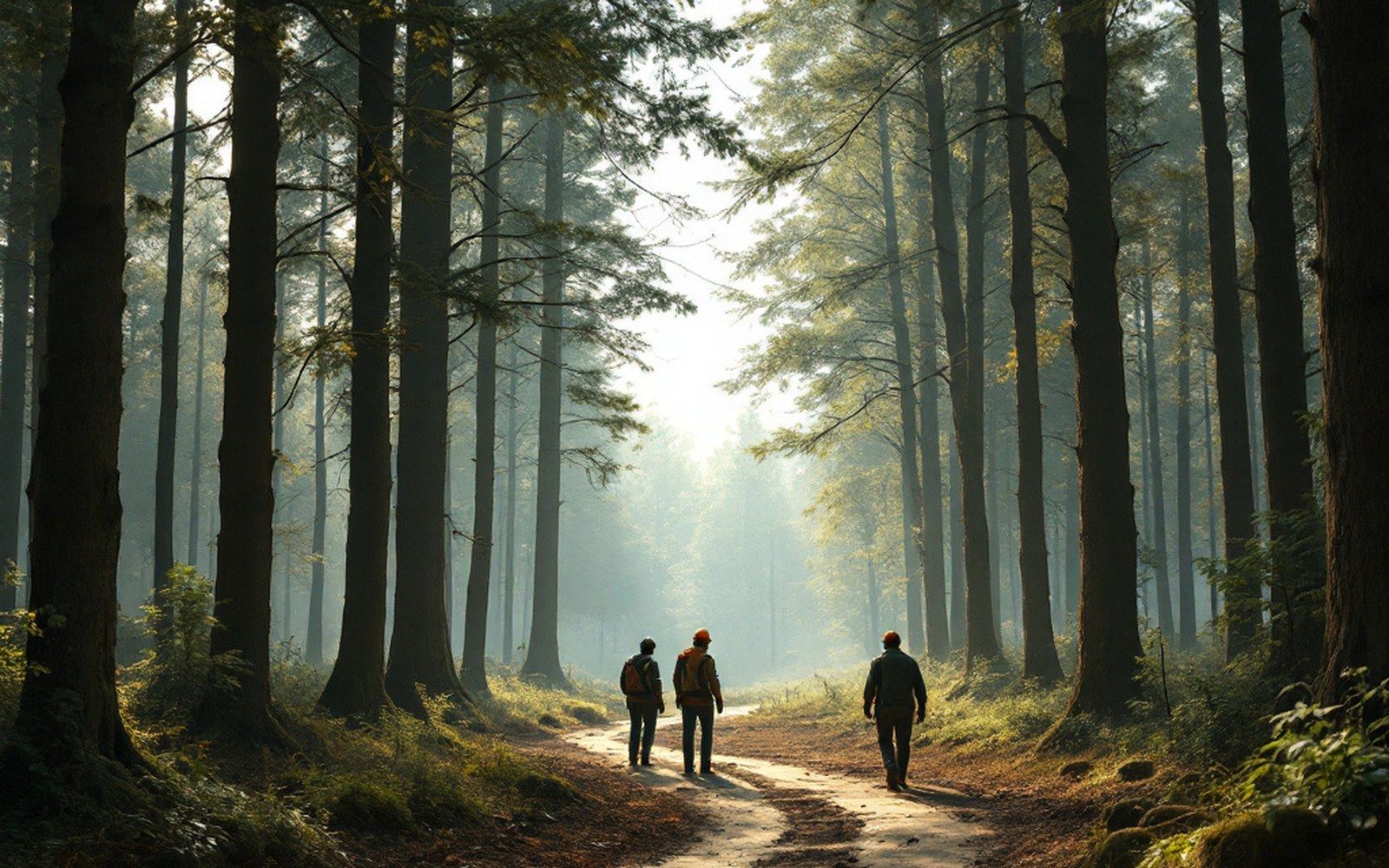
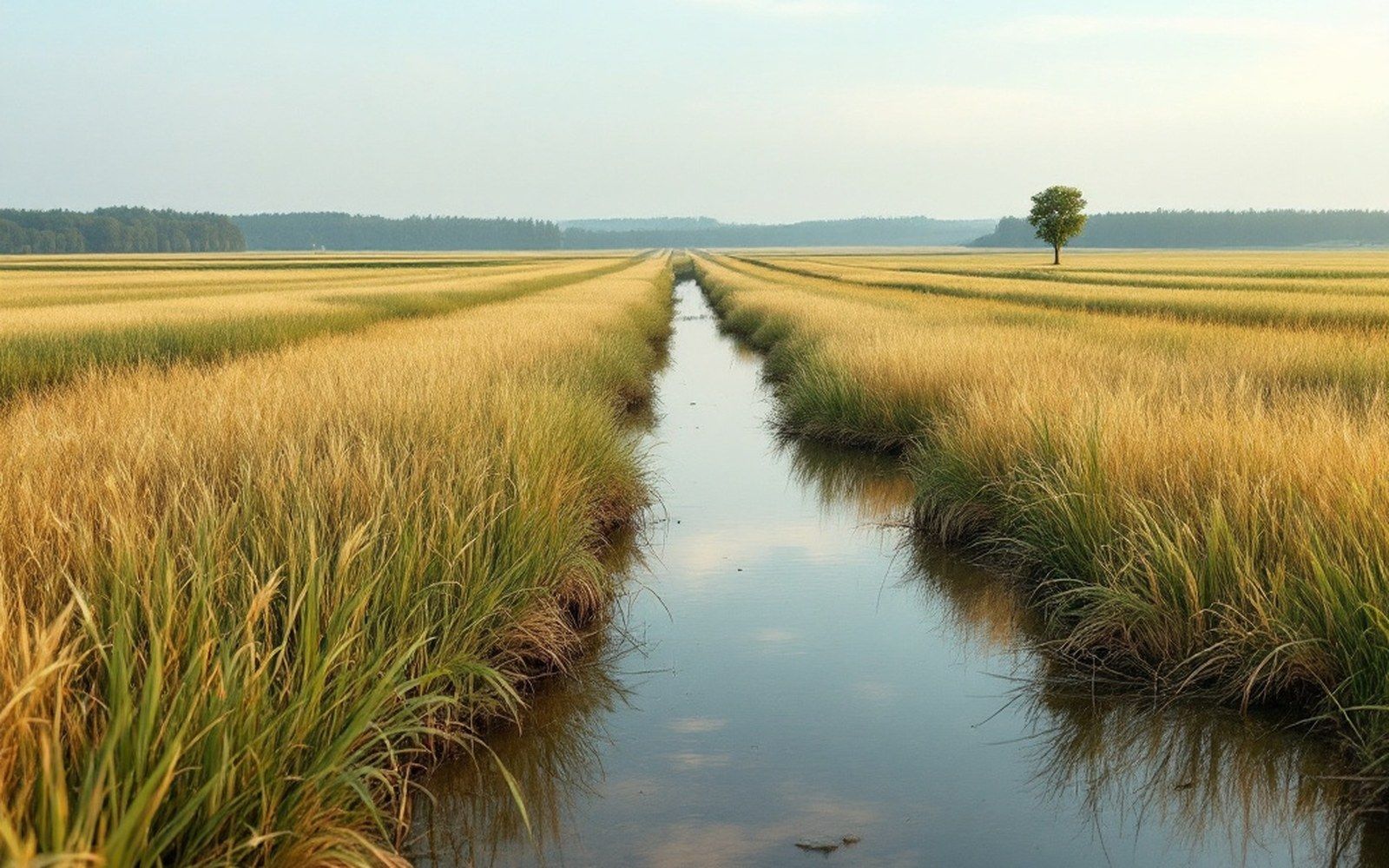
The men who carried the court's warrants into Indian Territory did so without backup, without radio and often without maps — and a documented number of them did not come back.
They rode into the Territory to execute the court's process, and a substantial number were killed doing it.Photograph · Sebastian County Online
Hired to Ride, Paid by the Paper
The United States Court for the Western District of Arkansas, sitting at Fort Smith under Judge Isaac C. Parker, could issue a warrant the moment a grand jury returned an indictment. Getting that warrant served was another matter entirely. The court's jurisdiction extended over roughly seventy-four thousand square miles of Indian Territory — the lands of the Cherokee, Choctaw, Chickasaw, Muscogee, and Seminole nations — and the federal government had no standing army of process-servers to work it. What it had was a United States Marshal for the district and the authority to commission deputies.
The deputies were not salaried officers in any modern sense. They were paid by results: fees for each warrant served, mileage for each mile ridden, a daily rate for prisoners kept under guard on the journey back to Fort Smith. The structure meant a deputy who returned empty-handed had largely ridden for nothing. It also meant the marshals who commissioned them had strong incentive to send men out repeatedly regardless of conditions, because the court's machinery only moved when someone physically carried its paper into the field.
A deputy entering the Territory rode under federal authority but into ground where that authority was contested at every level. The Five Nations each maintained their own laws, their own lighthorse police, and their own courts for disputes among their citizens. Federal jurisdiction applied — as the court's enabling legislation made explicit — only to crimes involving non-citizens of the nations, or to certain specified federal offenses. In practice the line was rarely clean, and deputies negotiated it on horseback, usually alone or in pairs, far from any courthouse ruling.
The southernmost of the Five Tribes held its own legislature, courts and governor — and sits largely outside the frame when the view begins at Fort Smith. See Chikasha.Photograph · Sebastian County Online
Who the Deputies Were
The men commissioned ran the full range of frontier biography. Some were former Confederate soldiers, some Union veterans. Some had law enforcement experience; others had worked as farmers, freighters or laborers and saw the deputy fee schedule as a workable income. The commission itself required little formal qualification. A deputy needed to be vouched for, bonded, and sworn — the bar was not high.
Bass Reeves, commissioned in 1875, is the most thoroughly documented of the deputies who worked Parker's court. Born into slavery in Arkansas and freed after the Civil War, Reeves had crossed into Indian Territory during the war and knew the country and several of its languages in a way few deputies could match. He served as a deputy marshal for the Western District for more than two decades, making thousands of arrests across a career that stretched well beyond Parker's tenure. His record is documented in court papers and newspaper accounts from the period; the scale of it is not contested by serious historians, though particular episodes have been subject to embellishment by later writers.
Reeves was exceptional. Most deputies are known from payroll records, fee books and coroner's returns rather than from any individual account. The records held by the National Archives for the Western District of Arkansas include marshal's accounts, docket entries, and the paperwork generated by deputies claiming their fees — an administrative record that, read carefully, maps the geography of enforcement across the Territory.
The Cost of the Work
Parker's court is frequently cited as having lost more deputy marshals in the line of duty than any comparable federal jurisdiction of the era. The figure most commonly given is sixty-five deputies killed over the period of Parker's tenure, from 1875 to 1896. That number derives from court and marshal's records and has been cited by historians of the court; it should be read as an approximate total assembled from incomplete documentation rather than a precisely audited count, since record-keeping in the field was inconsistent and some deaths may not have been formally reported.
The causes were various. Deputies were ambushed while attempting arrests. They were shot in confrontations where a fugitive had friends nearby. Some died of illness or accident in country that was days from medical attention. The physical conditions of the work — long rides, river crossings, the need to camp in terrain shared with the men they were pursuing — made every assignment a compound risk.
The Territory's geography concentrated danger in particular corridors. The Canadian River bottoms, the Winding Stair Mountain country of the Choctaw Nation, and the rougher stretches of the Cherokee hills all appear repeatedly in the record of deputies killed or wounded. These were not random spaces; they were the places where fugitives from the court's process found the cover and the local network that made capture difficult.
A deputy who made an arrest faced the further problem of getting a prisoner — sometimes several prisoners — back to Fort Smith alive and in custody. The court provided no infrastructure for this. Deputies hired their own horses, arranged their own provisions, and were responsible for the security of anyone they were transporting. Prisoners were sometimes shackled together in a wagon for the journey back; the record includes cases of escape, of attempted disarmament, and of violence during transport. The deputy's fee for guarding a prisoner applied only when the prisoner was delivered, which meant the economics of the work pushed against any outcome short of successful return.
Fort Smith itself was the receiving end of this system. The jail beneath the courthouse — a structure that the building's own history documents in some detail — was the destination for everyone brought in. Its condition through much of Parker's tenure was notoriously poor, a fact remarked on in contemporary accounts and in the judge's own correspondence with the Justice Department.
What the Record Holds
The deputies who worked Indian Territory left behind an administrative record rather than a heroic one. Fee books, mileage claims, coroner's verdicts, and occasional newspaper reports add up to a picture of men doing dangerous piecework at the edge of federal reach. The History of the Federal Judiciary maintained by the Federal Judicial Center places Parker's court in the context of the broader expansion of federal jurisdiction across the post-Civil War West — a context that makes plain how unusual the court's situation was, and how much of its actual function depended not on the judge's rulings but on the men willing to ride for the paper.
Their names are in the records. Most of them are nowhere else.
Forcibly removed twice before Indian Territory was even its name, the Seminole Nation arrived with fewer people and less land than any of the Five Tribes — and built a government anyway. See Semvnole.Photograph · Sebastian County Online