Coal at a price: how the Sebastian County seams were actually worked
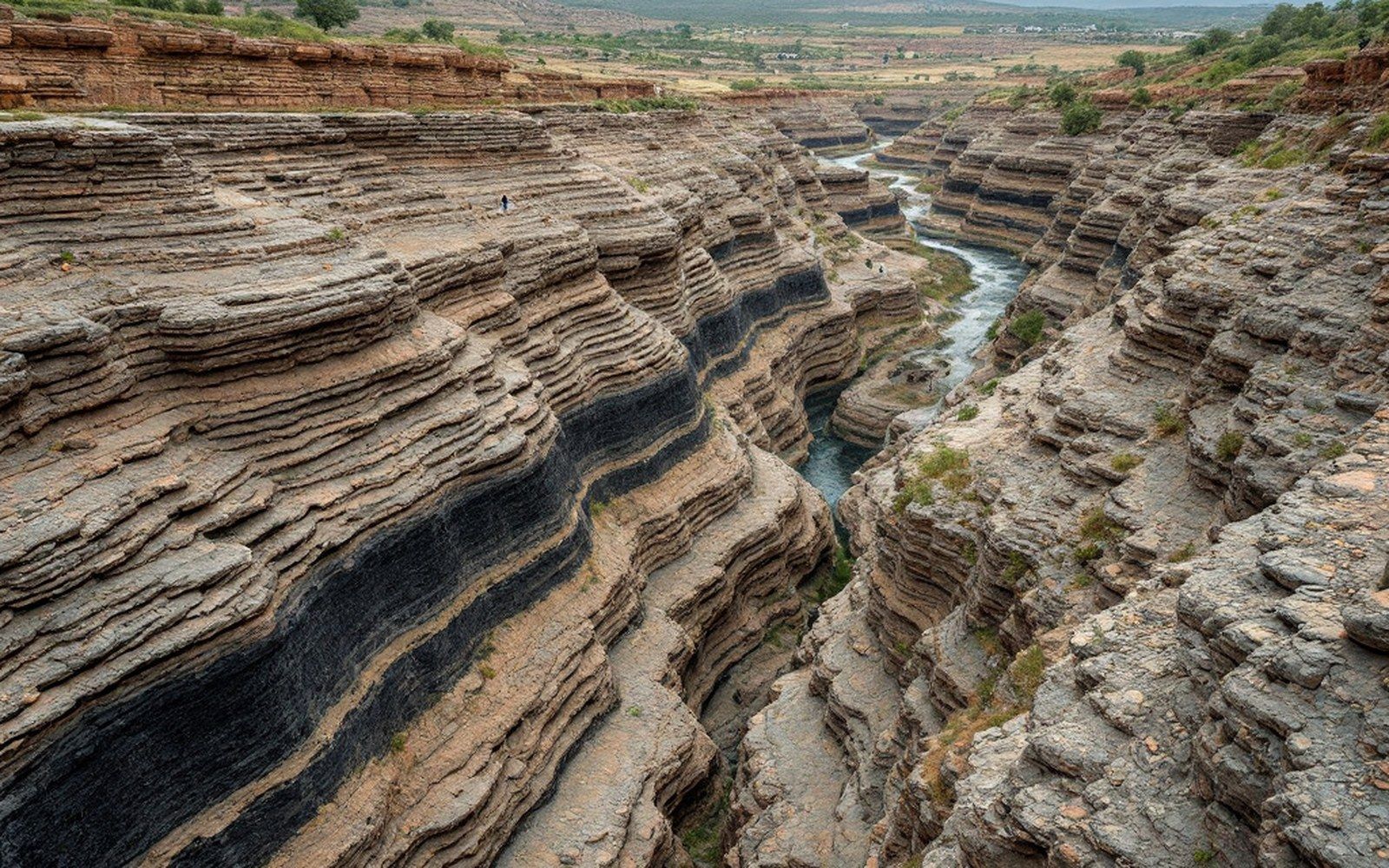
The coal beneath the hills east of Fort Smith was not easy coal. The semi-anthracite seams of the Arkansas River valley ran thin — commonly two to four feet, occasionally a little more — and their hardness, the very quality that made the fuel valuable, made the cutting punishing. A miner who spent a shift in a two-foot seam spent it lying on his side, swinging a pick in a space that did not allow him to stand, or even to kneel comfortably. The geometry of the work shaped everything else: the tools, the injury patterns, the wages, and eventually the demography of the towns above.
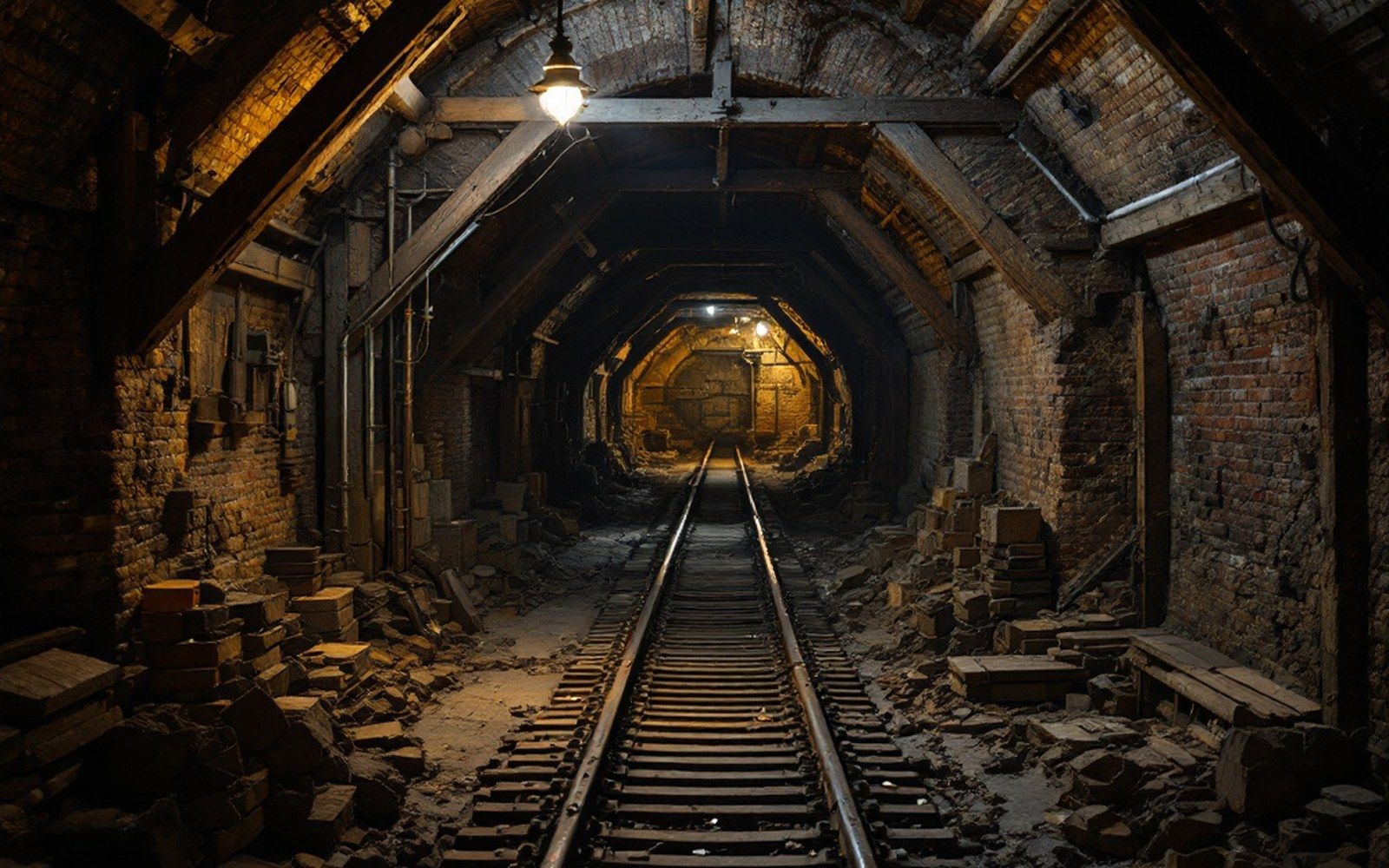
Entry into a working mine here was almost always through a drift portal cut horizontally into the hillside, following the seam's pitch into the coal. Vertical shaft mines existed but were less common in this part of the field, where topography allowed operators to drive straight in. Once inside, a miner advanced by undercutting the face — digging out the base of the coal first, by hand or with a mechanical cutter where one was available, so that when he shot the seam with a powder charge the coal broke cleanly downward rather than shattering into slack. The undercut itself might require lying flat, head turned sideways, swinging a short-handled pick. The coal was then loaded by hand into small cars — gobs, in the local usage — and pushed or mule-hauled to the surface and up to the tipple for sorting and sizing.
The accident record
Payment was by the ton of clean coal delivered, not by hours worked or ground covered. That structure pushed miners to cut fast and load fast, and it transferred significant risk downward. Timbering — the props and caps that held the roof above the working face — was the miner's own responsibility to set, often using company-supplied timber that he had to haul himself. A man who stopped to timber carefully produced less coal and earned less money that week. A man who did not timber carefully risked a fall of roof, which was the single most common cause of death in these mines.
The Arkansas Geological Survey maintained records of mine conditions across the field, and Arkansas mine inspection reports from the late nineteenth and early twentieth centuries document repeated roof-fall fatalities across the Sebastian County workings. The pattern is consistent with what historians of American hard-coal mining have established more broadly: thin-seam, hand-loading operations generated higher injury rates per ton of output than thicker, more mechanized seams, because every step of the work — cutting, shooting, loading, timbering — was performed by a man in a cramped space with limited room to brace himself or move clear. Explosion was a lesser but real hazard; the semi-anthracite coal produced less firedamp than bituminous seams, but gas and coal dust both accumulated in poorly ventilated workings, and powder charges were used throughout the period.
The mines around Hartford, Huntington, and the other working towns of the field were typical in this respect. Individual fatalities — a roof fall here, a haulage accident there — formed the steady background of the industry, documented in the inspectors' annual reports rather than in any single dramatic disaster. But the cumulative toll across the field, across the decades of peak production, was substantial.

Who did the work
The labor force underground was not a single community. The coalfield drew immigration directly: Welsh, English, Italian, Polish, and Slovak miners came in numbers sufficient to leave a mark on church rosters, lodge records, and cemetery inscriptions in the mining towns. Many had worked coal elsewhere — in Pennsylvania, in the Midwest — before following the railroads south and west. There was also a significant Black mining workforce. The companies sometimes used Black workers as strikebreakers during labor disputes, and sometimes employed them on a more stable basis; the racial geography of work underground — which sections, which mines, which pay scales — varied by operator and by period and was never equitable.
Organized labor arrived early. The United Mine Workers of America chartered locals across the Sebastian County field in the 1890s, and the history of the field is punctuated by strikes, some of them long and bitter, over tonnage rates, the truck system, and — repeatedly — safety conditions. The Library of Congress holds photographs from the National Child Labor Committee that document the use of boy labor in American mines generally, including the lower-South coal districts; the practice was not unique to this field, but it was documented here as elsewhere, with boys working as trappers — opening and closing ventilation doors to direct airflow — and as helpers on the haulage roads.
What survives
Surface machinery changed the look of the mine entrance more than the conditions underground. A headframe above a shaft, or a mechanical tipple beside a drift portal, signaled a more capitalized operation, but it did not necessarily mean the working face itself had changed. Mechanical undercutting machines, running on compressed air or electricity, did reach some of the Sebastian County mines in the early twentieth century and reduced the most exhausting part of the work. They did not eliminate hand loading; coal cut by machine still had to be shoveled into cars by a man in a low space. Full mechanization — the longwall and continuous-miner era — came too late to matter in this field. By the time the technology existed, the economics had already turned against the seams.
What the landscape preserves is largely negative: the closed portals, the slump of old haulage roads, the bony dumps of shale and slate that mark where a tipple sorted out the waste. The underground geometry — the rooms and pillars left when room-and-pillar mining extracted coal in a grid and left standing columns to hold the roof — shows occasionally as subsidence, subtle depressions in fields and hollows that trace the old workings below. None of it is visible without knowing what to look for. The work was done in the dark, out of sight, and most of what it cost the men who did it was recorded only in inspection reports, union minutes, and the tallies of the dead.