Coal this far south was supposed to be soft. What the Arkansas River valley held instead changed the economics of an entire region.
The valley's coal is unusually hard and clean-burning, which is why it was worth moving and why the railways came.Photograph · Sebastian County Online
A rank apart
Most of the coal laid down across the American interior is bituminous — soft, smoky, high in volatiles. The seams running beneath the hills west of Fort Smith are something else. Technically classified as semi-anthracite, they sit in the narrow rank between bituminous coal and true anthracite: harder than the one, not quite as dense as the other, but sharing anthracite's most commercially valuable properties. They burn long and hot, produce relatively little smoke, and leave behind a small, clean ash. For industrial buyers in the late nineteenth century — railroads burning fuel in their own locomotives, metallurgical furnaces, and urban gas plants — those qualities mattered enormously. Soft bituminous coal fouled boiler tubes and left clinker; semi-anthracite did neither.
The Arkansas Geological Survey has documented the seams as part of the Arkoma Basin, a broad structural trough that runs east-west along the Oklahoma-Arkansas border. The basin formed as the Ouachita Mountains were thrust northward during the Pennsylvanian Period, roughly 300 million years ago, compressing organic sediments under heat and pressure sufficient to drive off most of the volatile content that keeps ordinary coal soft. That same compression also folded and faulted the seams, which is why working them was never straightforward: the coal is excellent, but it does not lie flat.
The main producing seams — the Stigler, the Dry Fork, the Lower Hartshorne, and several thinner members above and below them — vary in thickness from under two feet to perhaps five or six in the best ground. Five feet sounds workable; the reality underground was that miners spent much of their shift in cramped and difficult conditions, lying or kneeling on wet rock, cutting coal by hand or later by machine in spaces the roof barely allowed. The seam quality justified the effort only because the coal commanded a premium price at market.
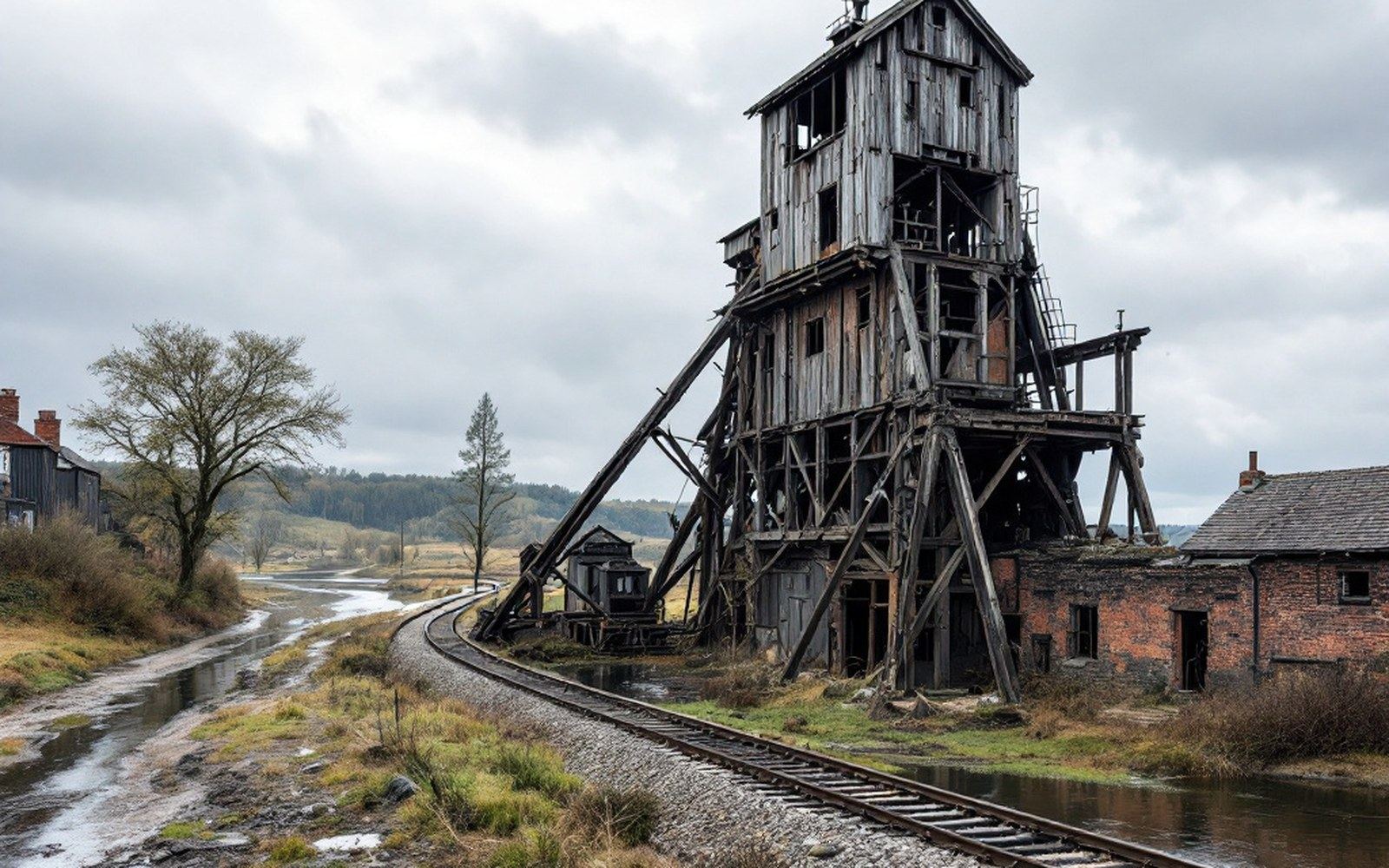
Coal has to be sorted, washed and loaded, and the plant that does it is most of what survives above ground. See Tipples and washers.Photograph · Sebastian County Online
Why the railways came
Premium coal stranded in hill country is worthless. The transformation of the Sebastian County and LeFlore County coalfield into a functioning industry depended entirely on whether a railway could reach it, and two competing lines eventually did.
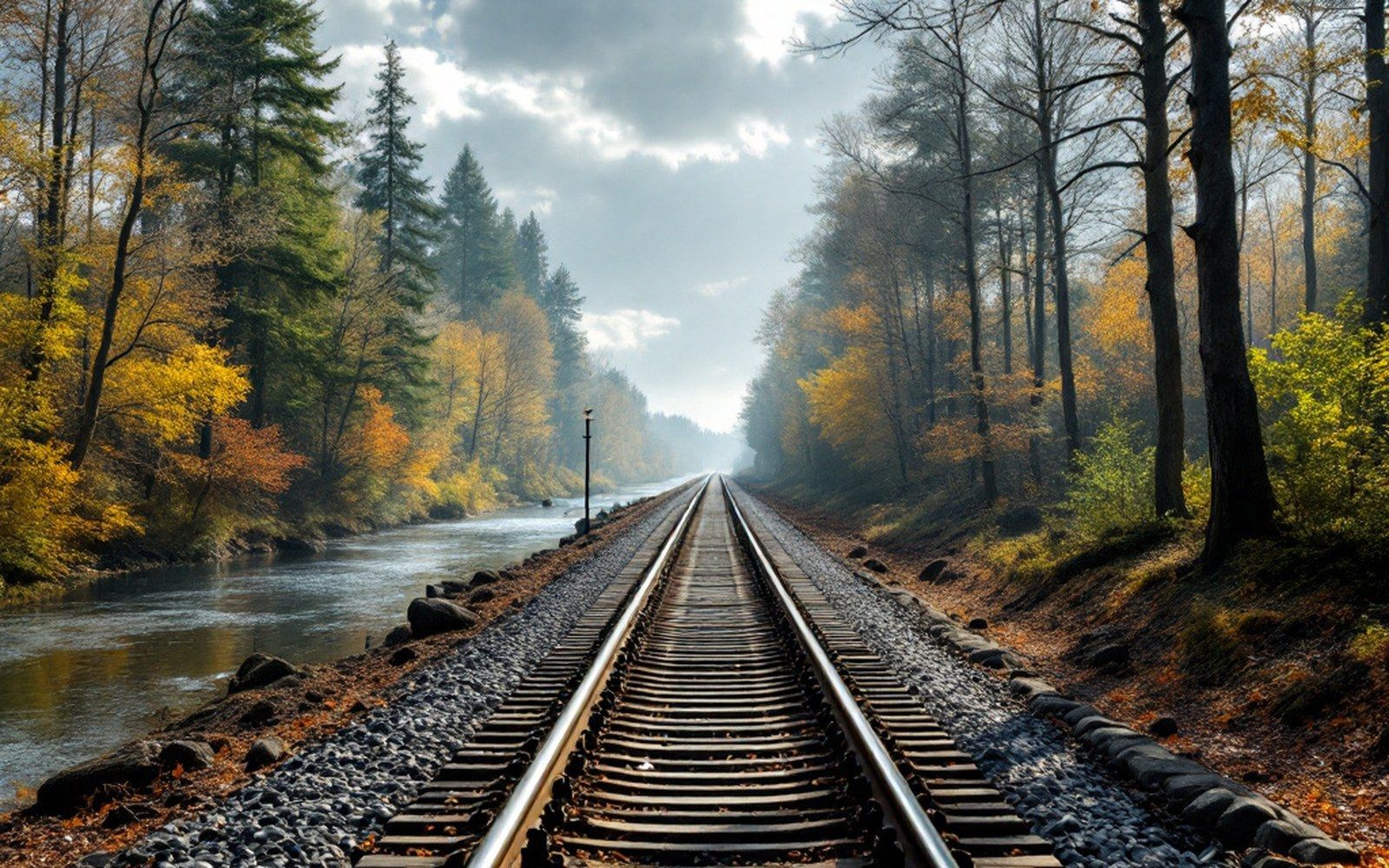
The St. Louis–San Francisco Railway — the Frisco — pushed through the Arkansas River valley and into the hills in the early 1880s, threading a route that placed stations at Hartford, Huntington, Mansfield, and the smaller communities that grew up around each mine. The Frisco's interest was partly to carry the coal east to St. Louis and beyond, and partly strategic: a line needing fuel for its own engines had a powerful incentive to control nearby high-grade coal. The Kansas City Southern followed a north-south axis through the same country, giving the coalfield a second outlet and connecting it toward Gulf ports.
Both railways required the coal to justify their routes, and the coal required the railways to justify its extraction. The relationship was circular and mutually dependent — which also meant that when one side of the equation weakened, the other suffered immediately. The towns that grew along those rights of way — places like Bonanza, Jenny Lind, and Midland — were expressions of that interdependence; their street grids, their company housing, and their tipples were all oriented toward the railhead, not toward any older geography of settlement.
The coal's rank mattered here in a precise way. Bituminous coal from Illinois or Missouri could reach St. Louis more cheaply. The only reason a shipper would pay Arkansas freight rates was if the product was genuinely superior for a particular end use. Semi-anthracite's low volatile content and high fixed-carbon percentage made it the preferred fuel for certain industrial furnaces and for domestic use in areas that had grown accustomed to the cleaner burn of Pennsylvania anthracite but could not afford the transport cost from the East. Arkansas semi-anthracite filled that gap.
What the rank means in practice
Coal rank is a technical classification based on carbon content and calorific value, measured after the volatiles are driven off. True anthracite typically runs above 92 percent fixed carbon; bituminous coal may be anywhere from 45 to 85 percent. Semi-anthracite occupies the 86–92 percent range — close enough to anthracite in performance that it could substitute for it in most applications, but produced in a geological setting very different from the Pennsylvania fields that supplied most of the eastern market.
That geological setting also shaped the character of the seams physically. Because the Arkoma Basin compression was intense, the coal is brittle; it fractures into blocky pieces rather than the small slack and fines that soft-coal mining tends to produce. This was commercially desirable — lump coal commanded higher prices than screenings — but it also meant that a poorly timed shot or a dull pick could shatter a run of coal into unsaleable dust. The skill of the miner lay partly in reading the cleat, the natural fracture pattern in the seam, and working with it rather than against it. That knowledge, largely unwritten, was carried in the hands and eyes of men who had learned the coal in the Midlands of England, in Wales, in the coalfields of Pennsylvania, and who brought those habits into the Arkansas hills.
The washing and sorting of this coal — the tipple and washer that stood at the surface over each mine portal — was calibrated to the specific properties of semi-anthracite. The coal's density meant it separated cleanly from the shale and bone that accompanied it in the seam. A well-run preparation plant could deliver a consistent, graded product that premium buyers would specify by name. Several of the operations on the Choctaw Nation side of the Arkansas line — where much of the subsurface coal lay beneath sovereign Choctaw territory, developed under lease arrangements that required tribal consent and federal approval — achieved that kind of market reputation in the 1890s and early 1900s, before cheaper fuels began to undercut the premium the seam quality had commanded.
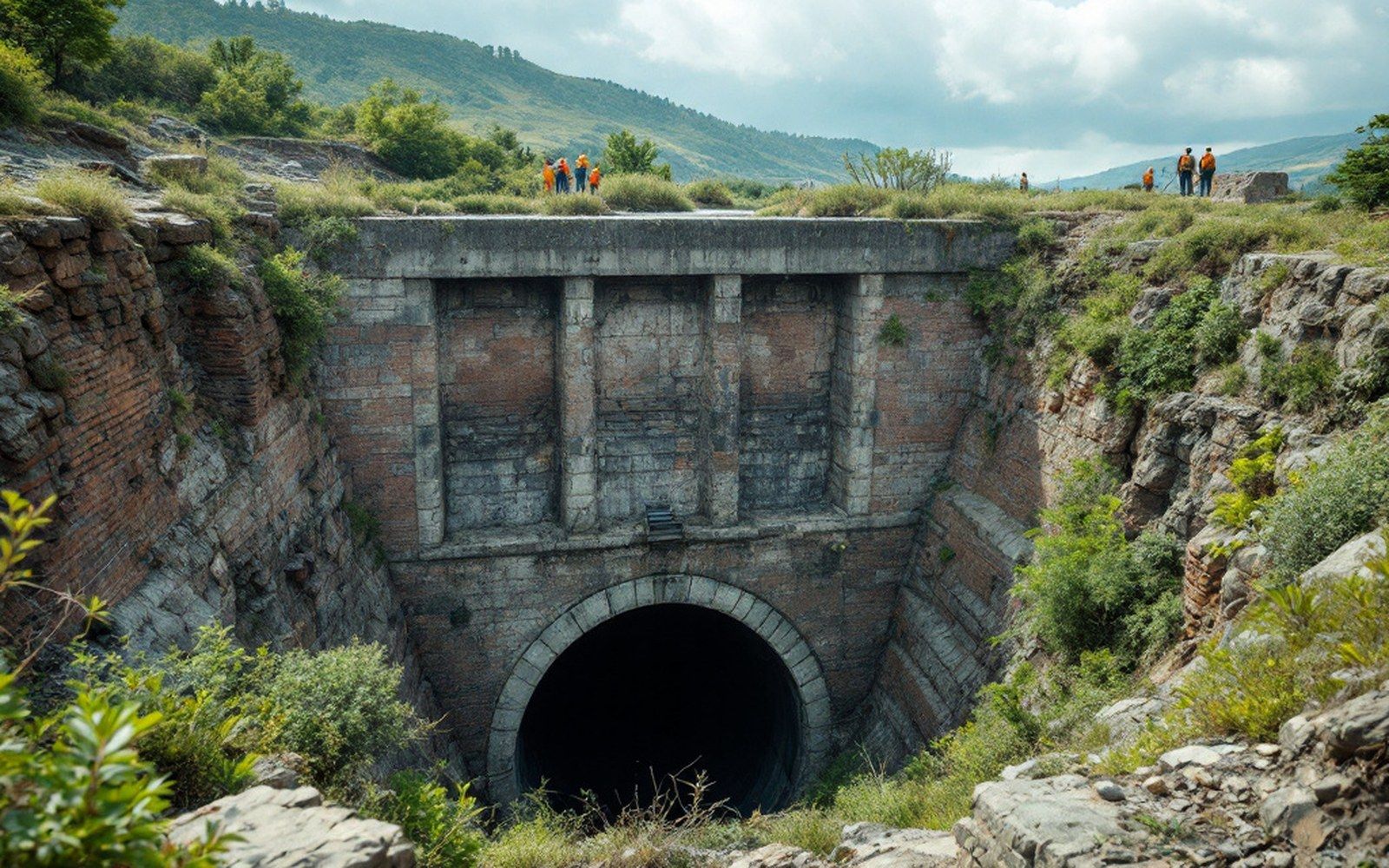
Fuel oil, gas and cheaper strip-mined coal elsewhere, rather than the seams running out. See What closed them.Photograph · Sebastian County Online
The seams did not run out. What closed the mines, across several decades from the 1920s onward, was the arrival of fuel oil and natural gas, and the competition from strip-mined bituminous coal elsewhere that could be delivered at prices the underground semi-anthracite could not match, regardless of its superior burn. The geology that made the coal worth extracting in the first place — the folding and faulting that concentrated its carbon content — also made it expensive to produce. Quality, in the end, was not enough.
The road that connected the coalfield to markets, and set which towns grew. See The Frisco line.Photograph · Sebastian County Online