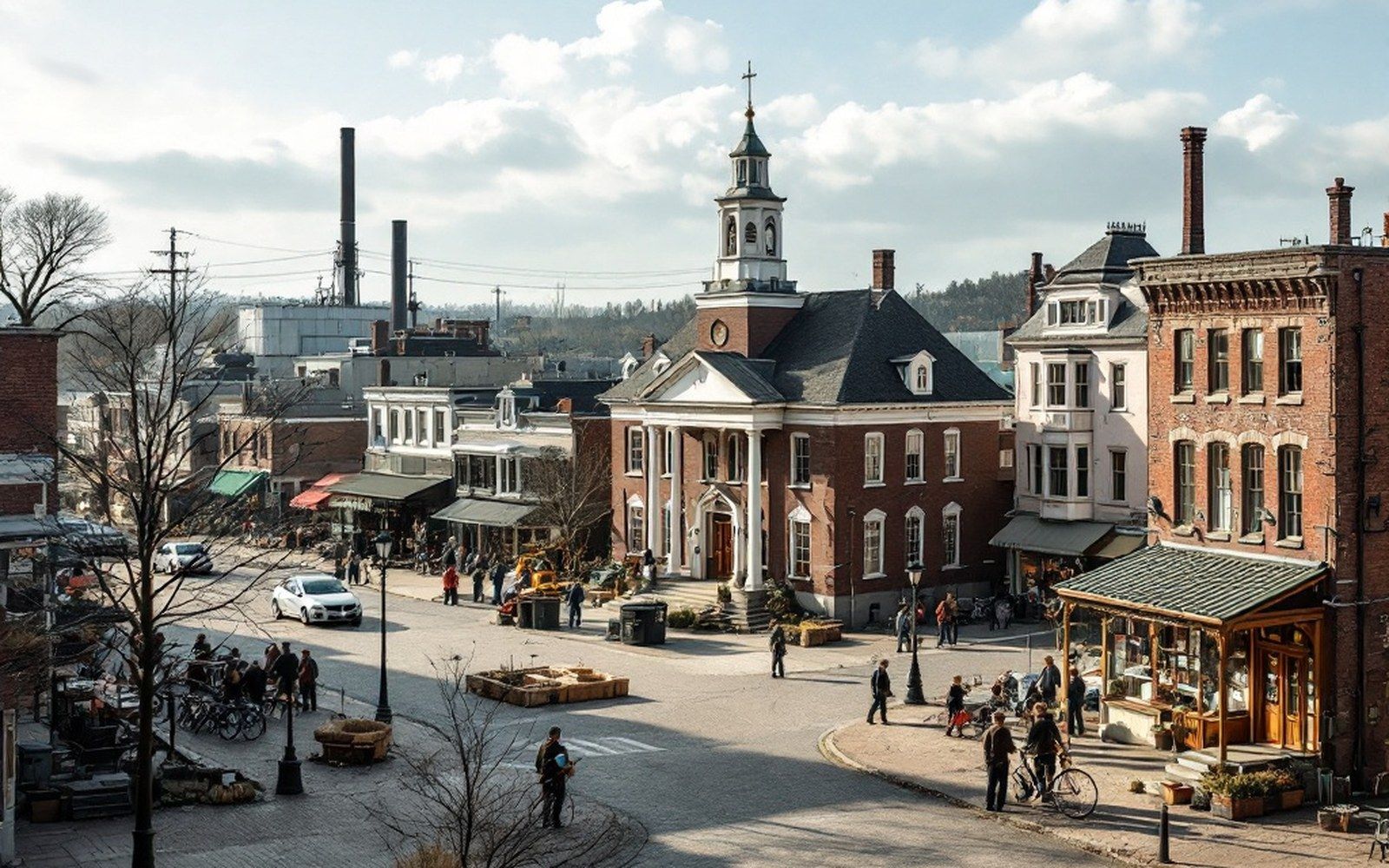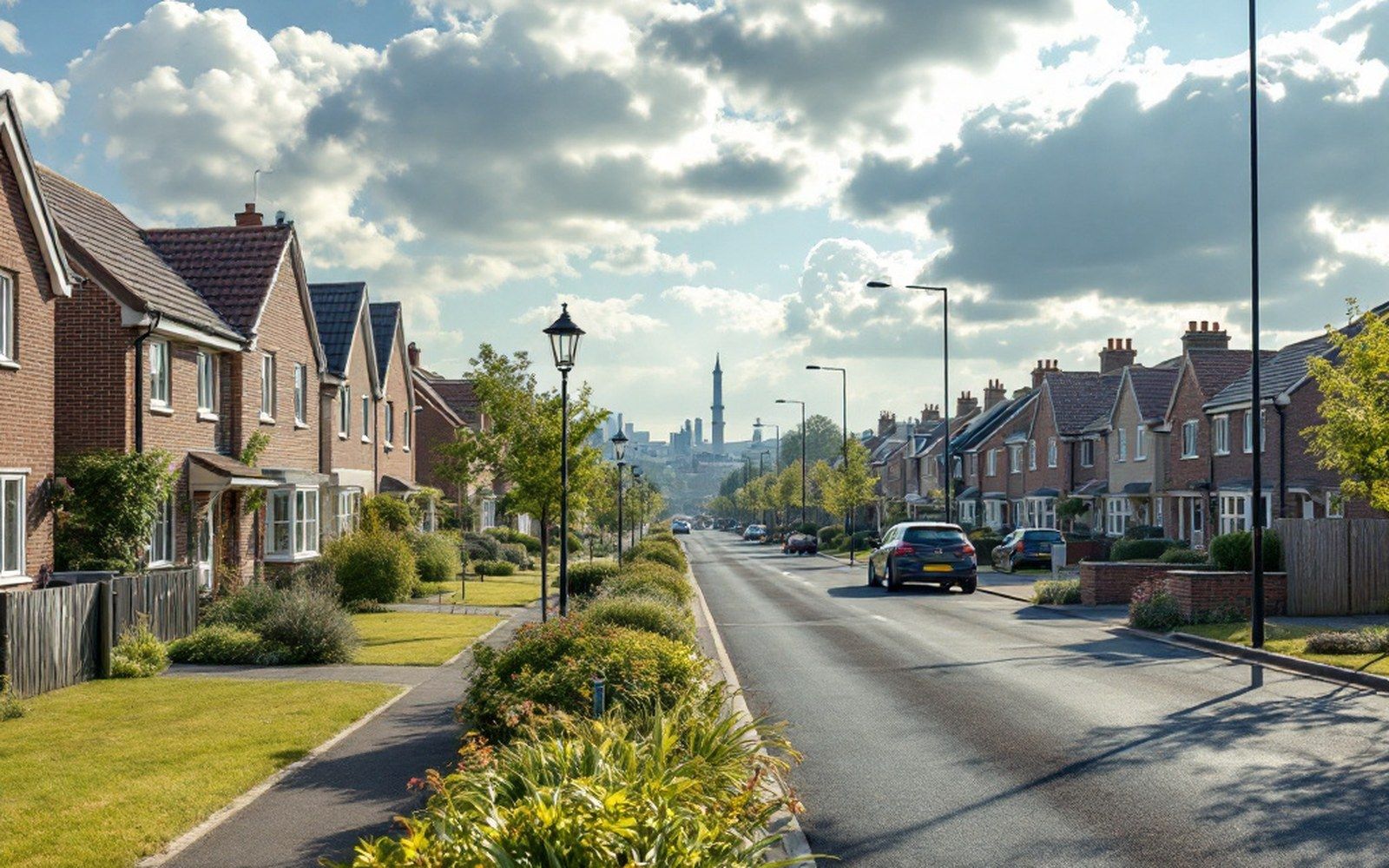
Two towns that found their own footing beside a larger one
Fort Smith collected most of the obvious advantages — the bluff, the confluence, the federal court, the railway yards. Barling and Lavaca grew up in its shadow, but neither is simply a suburb that failed to become the center. Each settled into its own logic, and that logic is still readable in the street pattern and the land use today.
Barling sits on the south bank of the Arkansas River, immediately downstream from Fort Smith, separated from it by the kind of boundary that looks arbitrary on a map and is not. The flat bottomland there suited the kind of industry that needed river access and rail connection without the constraints of an already-built town. The Frisco line ran through, and the sidings that fed local operations left their mark on the grid. Barling incorporated as a city in 1960, late enough that its residential streets have the wide lots and setback ordinances of postwar planning rather than the tighter blocks of a nineteenth-century platting. The town has stayed small — a few thousand people — and its scale reflects the fact that it never captured a concentrating function: no court, no mine, no major yard of its own.
Lavaca is a different situation. It lies southeast of Fort Smith, in the creek-bottom and ridge country south of the Arkansas River, on ground that was settled for farming long before any town was platted there. The name is French — la vache, the cow — and almost certainly arrived through the French-speaking traders and hunters who worked the river country before American territorial organization imposed new names on most things. The town grew as a farming and service community, close enough to Fort Smith to be in its commercial orbit but far enough to have its own post office, its own identity, and a surrounding landscape of bottomland and low ridges that kept it from being absorbed. It too is small. The agricultural fringe is still visible in the lots that back up against fields rather than other subdivisions.

What Barling and Lavaca share is a relationship to Fort Smith that is proximity without subordination. Neither tried to compete with the federal court's town and neither was built on coal. They filled the spaces the larger economy left open — a flat reach of river bottom here, a creek-bottom farming community there — and they persist because those spaces still have their uses.