A town laid out for commerce, not mining
Greenwood became the Sebastian County seat in 1851, a decade before coal dominated the economy of the surrounding hills. The town sits roughly twelve miles south of Fort Smith on what was then the main road running through the Boston Mountain foothills, and its early purpose was administrative — courthouse, land records, the routines of county government — rather than industrial. That foundation gave Greenwood a different skeleton from the pure company towns that appeared later to the west and north, places platted by operators who needed housing near a portal and little else.
The county was created in 1851, carved from Scott County, and Greenwood was chosen as its seat almost immediately. The choice made geographic sense: the town sat near the center of the original county boundary before Sebastian County was later divided to create a second seat at Fort Smith. That division — Sebastian County is one of several Arkansas counties with two county seats — left Greenwood as the seat for the eastern, more rural district while Fort Smith handled the western, river-oriented side. Greenwood kept the courthouse; Fort Smith kept the commerce.
Coal beneath the plateau
The seams that ran beneath the western part of Sebastian County are semi-anthracite — harder and cleaner-burning than ordinary bituminous coal, ranking among the highest-grade deposits west of the Appalachians. The Arkansas Geological Survey has mapped the Sebastian County portion of the Arkansas coalfield extensively; the seams thin and deepen toward the east, which is part of why Greenwood itself was never a primary extraction site in the way that Hartford, Huntington, or Bonanza were. The coal country proper lies to the town's northwest, where the seams surface at workable depths.
What Greenwood supplied was proximity: it was close enough to the field to serve as a supply point, a place where merchants, lawyers, and county officials could participate in the coal economy without going underground. The Frisco railway line — the St. Louis–San Francisco — pushed through the region in the 1880s and changed the scale of everything. Tonnage moved. Towns that had a rail connection grew; towns that did not stalled. Greenwood had rail access, and its commercial district reflected that connection through the late nineteenth and early twentieth centuries, when coal royalties and mine wages circulated through the county's economy.
Staying after the coal left
The coalfield's decline was not sudden. Fuel oil displaced coal as an industrial and domestic fuel across several decades of the mid-twentieth century, and cheaper strip-mined coal from elsewhere undercut the underground semi-anthracite operations that required expensive labor in thin, hard seams. The mines around the Sebastian County field closed in stages. By the time the last significant underground operations wound down, Greenwood had already diversified enough — county government employment, agriculture, proximity to Fort Smith's labor market — that it did not collapse the way some of the pure extraction towns did.
The town's population has grown steadily in recent decades, driven partly by its position as a lower-density alternative to Fort Smith's urban core. The school district, the courthouse functions, and the county administrative offices create a stable institutional employment base that has no equivalent in the old mining settlements. That is the difference a courthouse makes: it generates paperwork, salaries, and foot traffic on a schedule that has nothing to do with commodity prices.
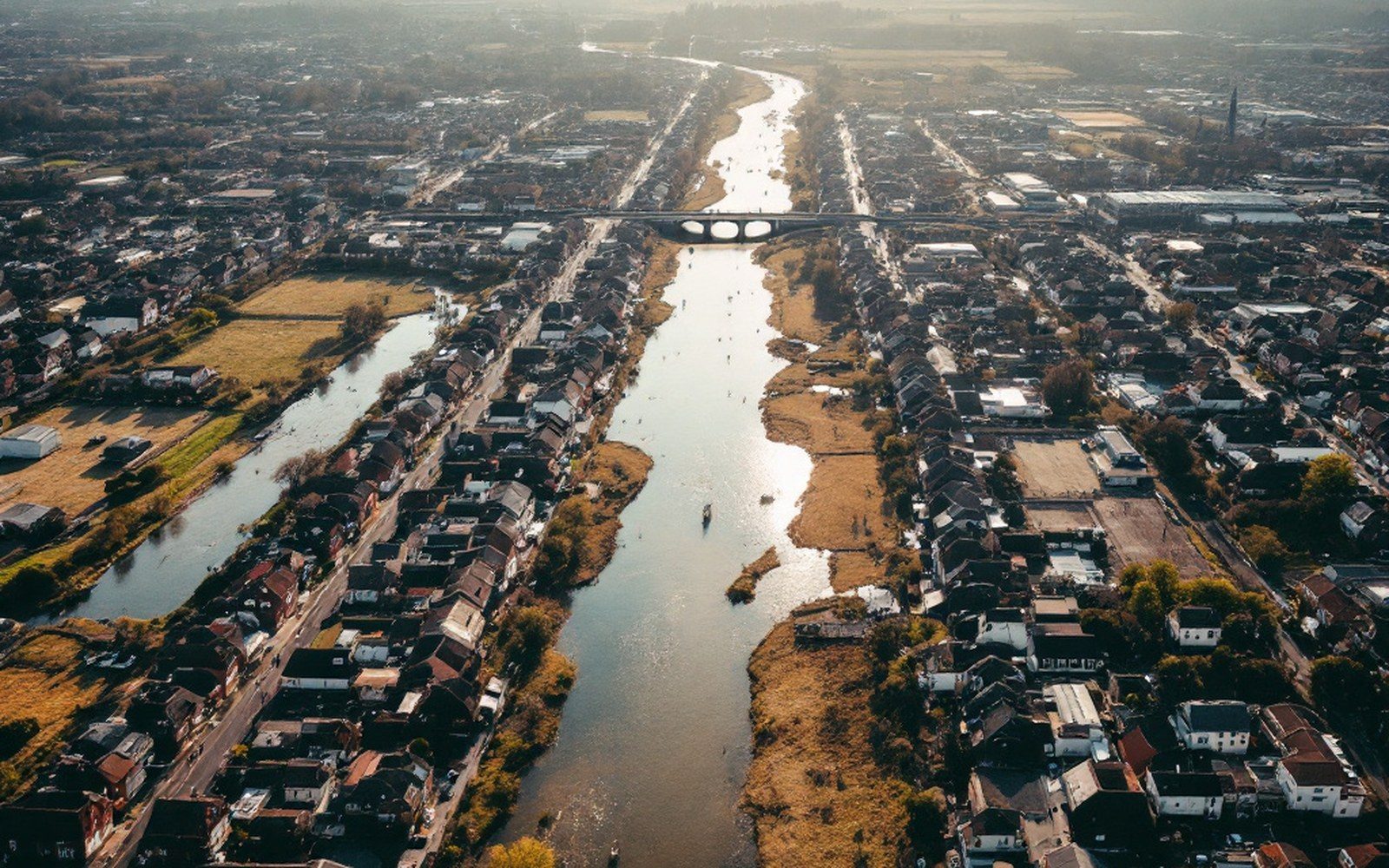
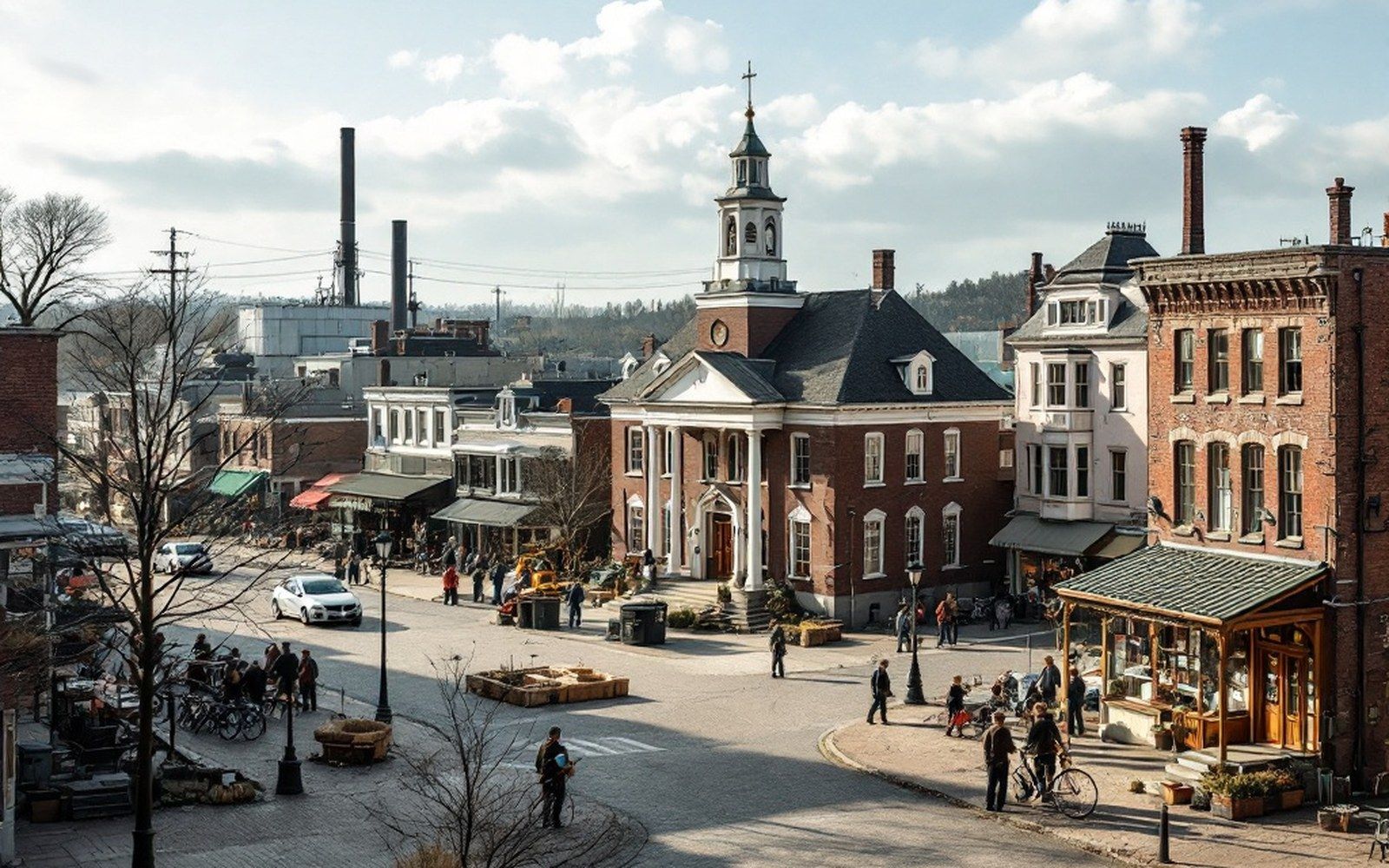
The courthouse square form that organizes Greenwood's downtown is legible in the street plan — the grid oriented to the public square, the commercial buildings that face it, the residential streets running out from there. It is a type that appears across the mid-South wherever county government was the founding institution. In Greenwood, the coalfield added a layer of industrial wealth on top of that civic foundation, and when the coal left, the foundation remained. The landscape result is a small county seat that looks its administrative age: solid, modestly scaled, and more durable than the boom economy that briefly surrounded it.