The plant that outlasted the mine
Coal comes out of the ground raw — a mix of lump, slack and rock that has to be broken to a consistent size, cleaned and graded before it moves to market. The building complex that performs those steps is called the tipple and washer, and in the Sebastian County coalfield it was usually the most substantial above-ground structure a company ever built. Long after a shaft was sealed, its timber rotted and its headframe taken for salvage, a tipple's concrete footings could still be read in the landscape.
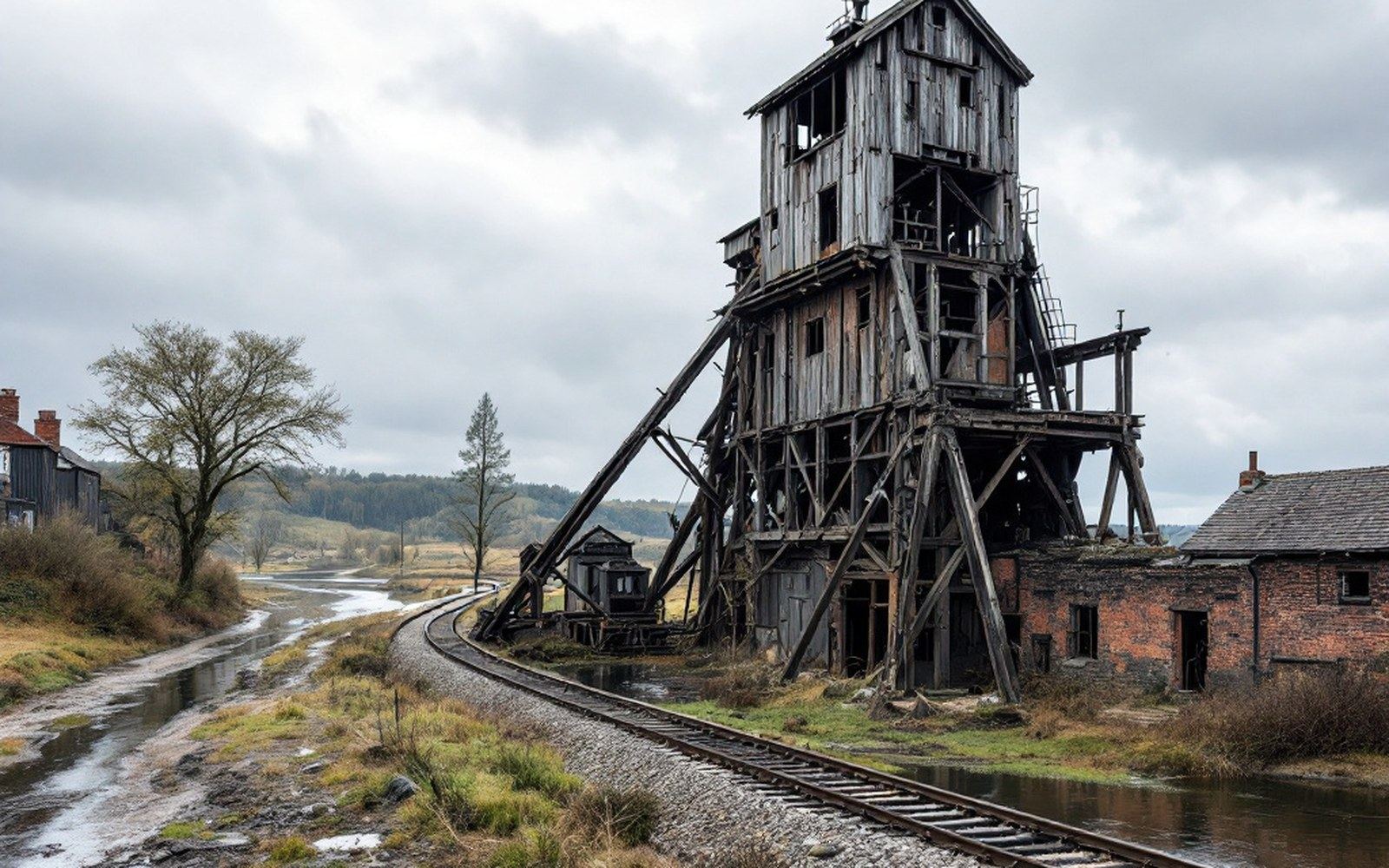
The name is older than the machinery. A tipple was originally just the pivot frame over which a mine car was tipped — emptied by inverting — into a chute below. By the early twentieth century the word had stretched to cover the entire complex: screens, jigs, picking belts, washers and loading spouts, all housed under one long shed angled steeply enough that gravity did most of the work. Coal entered at the top and left at the bottom, sorted by size into the grades the market wanted.
What the machinery did
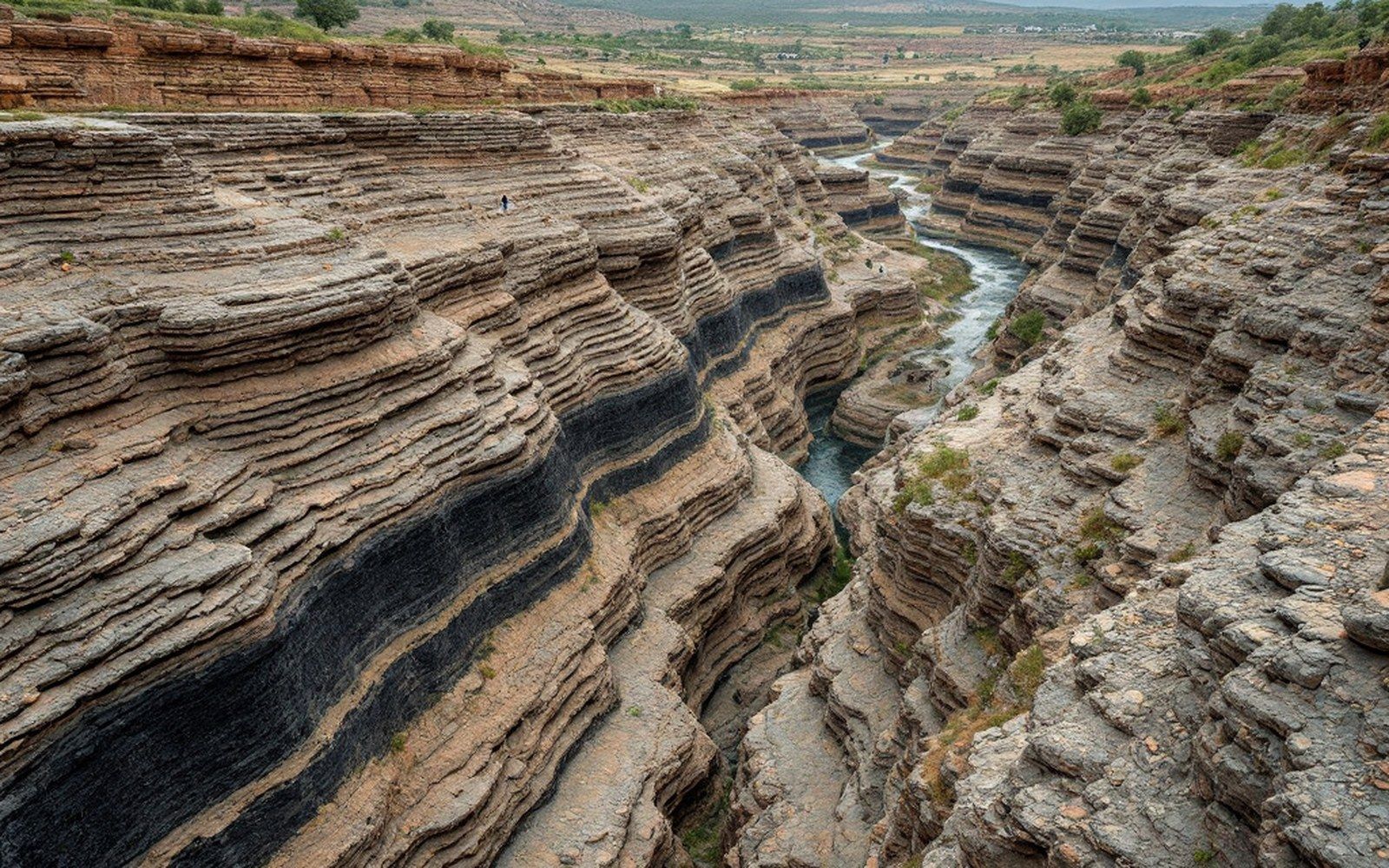
The Sebastian County coalfield sits on seams of unusually high-rank coal — semi-anthracite, nearly hard enough to be true anthracite, with low volatile content and low sulfur. That quality made washing more productive than in softer fields, because the dense coal separated cleanly from lighter shale and clay. The standard method was a jig washer: water pulsed upward through a bed of material, lifting the lighter rock and letting the heavier coal settle, then carrying the waste — called culm or refuse — off to a bank behind the plant. Those refuse banks, grassed over now, are often the first thing that marks a mine site on the ground.
The Arkansas Geological Survey has documented the seam geology that made this process work. The coal in the Hartford and Huntington district and across toward Bonanza and Greenwood runs in relatively thin, consistent seams with a high specific gravity, which meant the jig washers here could hold tighter tolerances than plants working bituminous coal to the east. The sorted product emerged graded as lump, egg, nut, pea and slack — each size commanding a different price, with lump and egg going to industrial buyers and slack sometimes compressed into briquettes or sold to power plants.
Picking belts ran parallel to the main screens. There, workers — often boys in the earlier decades, a documented fact across the whole Appalachian and Western Interior coalfields — pulled out visible rock and bone coal by hand as the material moved past them. The work was loud, dusty and relentless, and the picking shed was the place a new worker started before graduating underground.

What remains and why
Washers required water in volume, which is why every plant sat near a creek or drew from a settling pond. The Poteau River valley and its tributaries gave the operators their supply; the Poteau River runs through ground that once supported a dense cluster of working mines, and the pattern of tipple sites along it is still traceable in aerial photographs and on the ground.
The structures that have lasted longest are the ones built in concrete rather than timber, mainly after 1910, when operators began replacing the original wooden tipples that dominated the field's first generation. Concrete headwalls, loading pit liners and screen-deck supports survive at several sites in the Hartford and Bonanza area. The Library of Congress Historic American Engineering Record documented comparable industrial plant across the western coalfields, and the photographic record it holds gives a baseline for understanding what the Sebastian County examples looked like in operation.
The coal did not run out before the market did — fuel oil and natural gas undercut demand faster than any seam was exhausted. When a mine closed, the tipple usually followed within months: the screens and jig tables were sold for scrap or moved to a still-working plant, leaving only the fixed concrete behind. What stands today is the skeleton of the process, stripped of its moving parts but still telling anyone who looks at it how the valley turned raw seam coal into a graded commodity and put it on a Frisco car headed east.